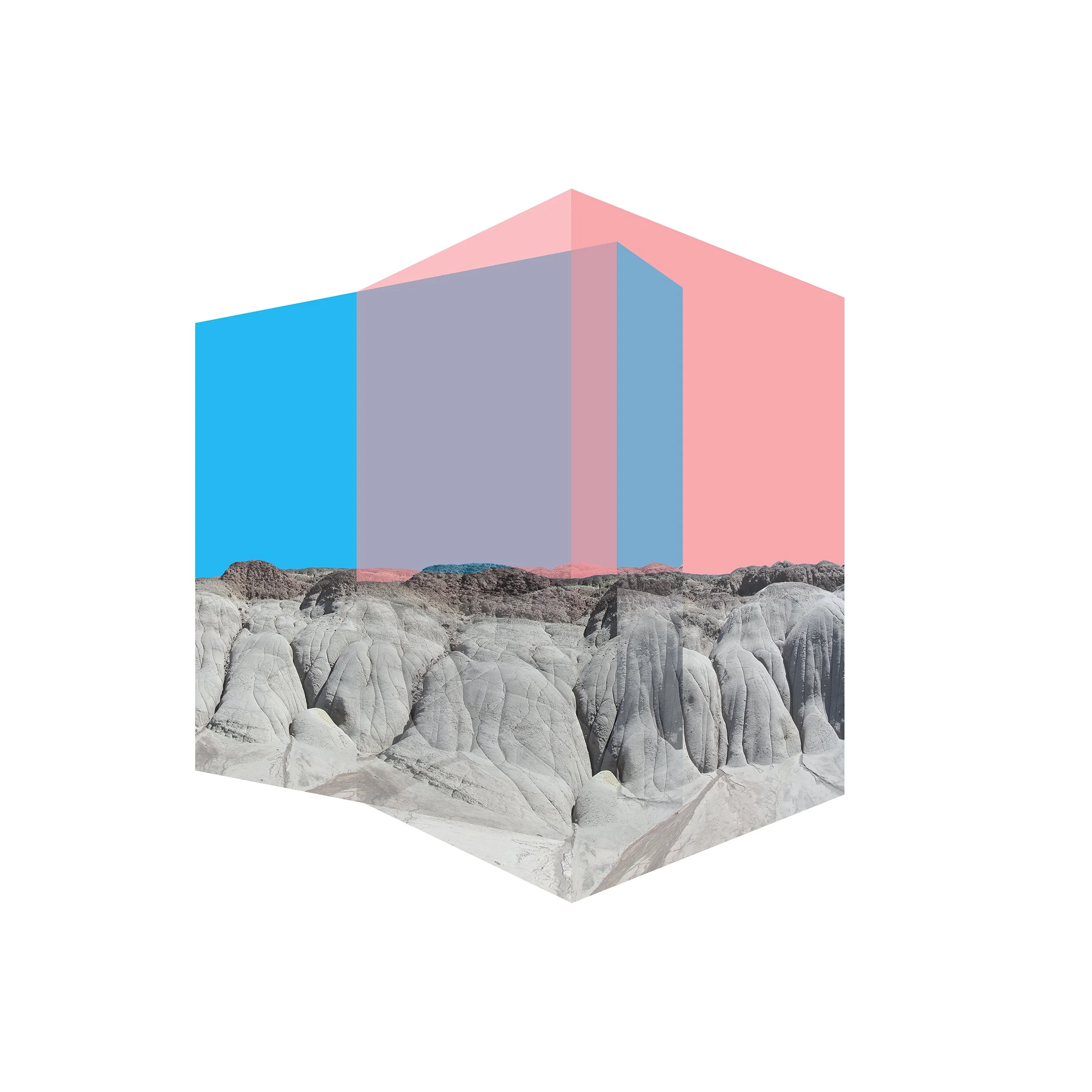
Michael Namingha
(Tewa/Hopi) A photographer that utilizes his work to document environmental changes and the impacts of industrial excavations. Through his work he's able to create dialogue between the ancestral landscapes of the Pueblo people and the oil industry. His non-confrontational approach invites audiences to engage with his works in ways that allow them to witness the true environmental effects of the oil and gas industries. He aims to bring attention and awareness to the treatment of Pueblo homelands.
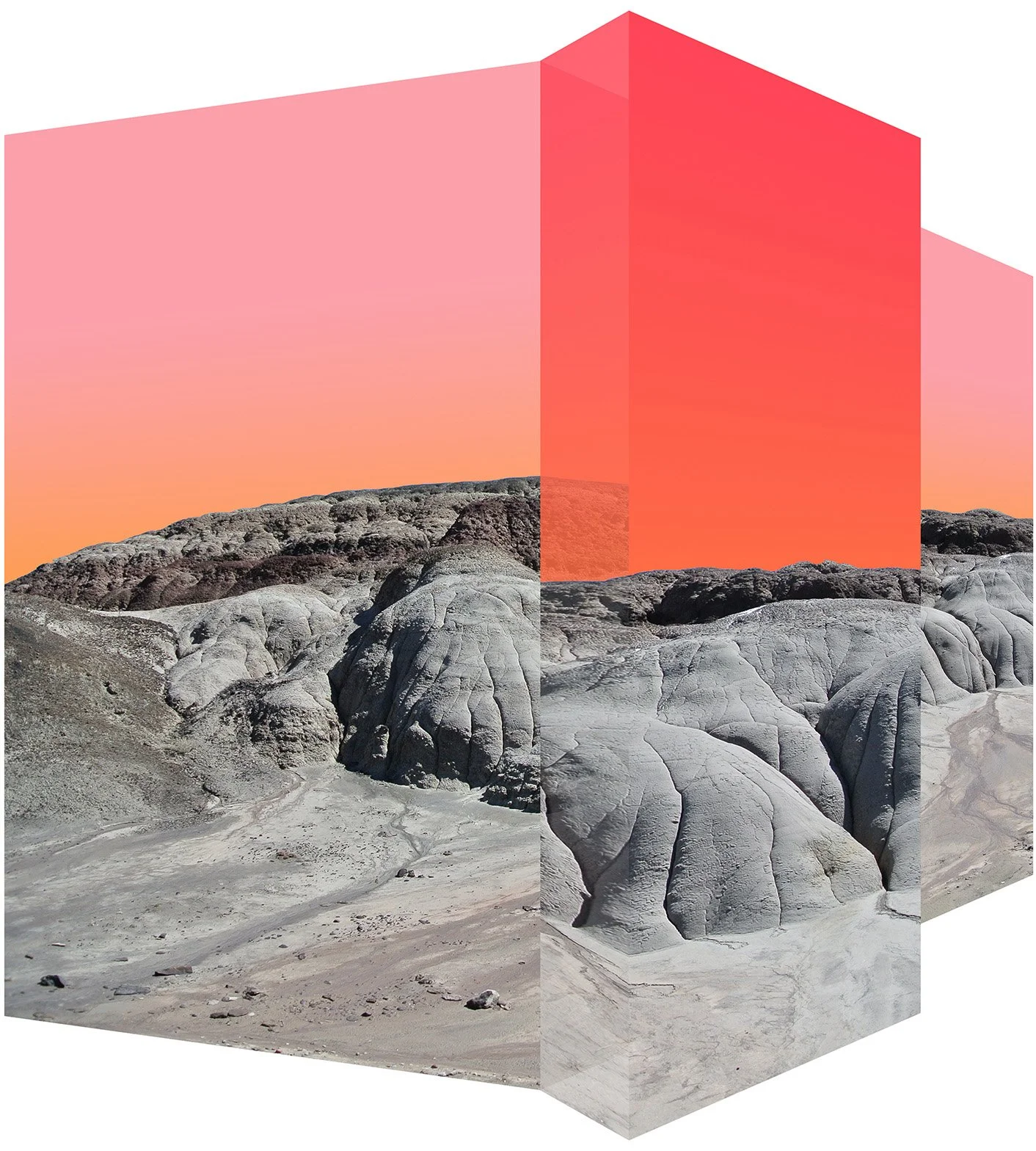
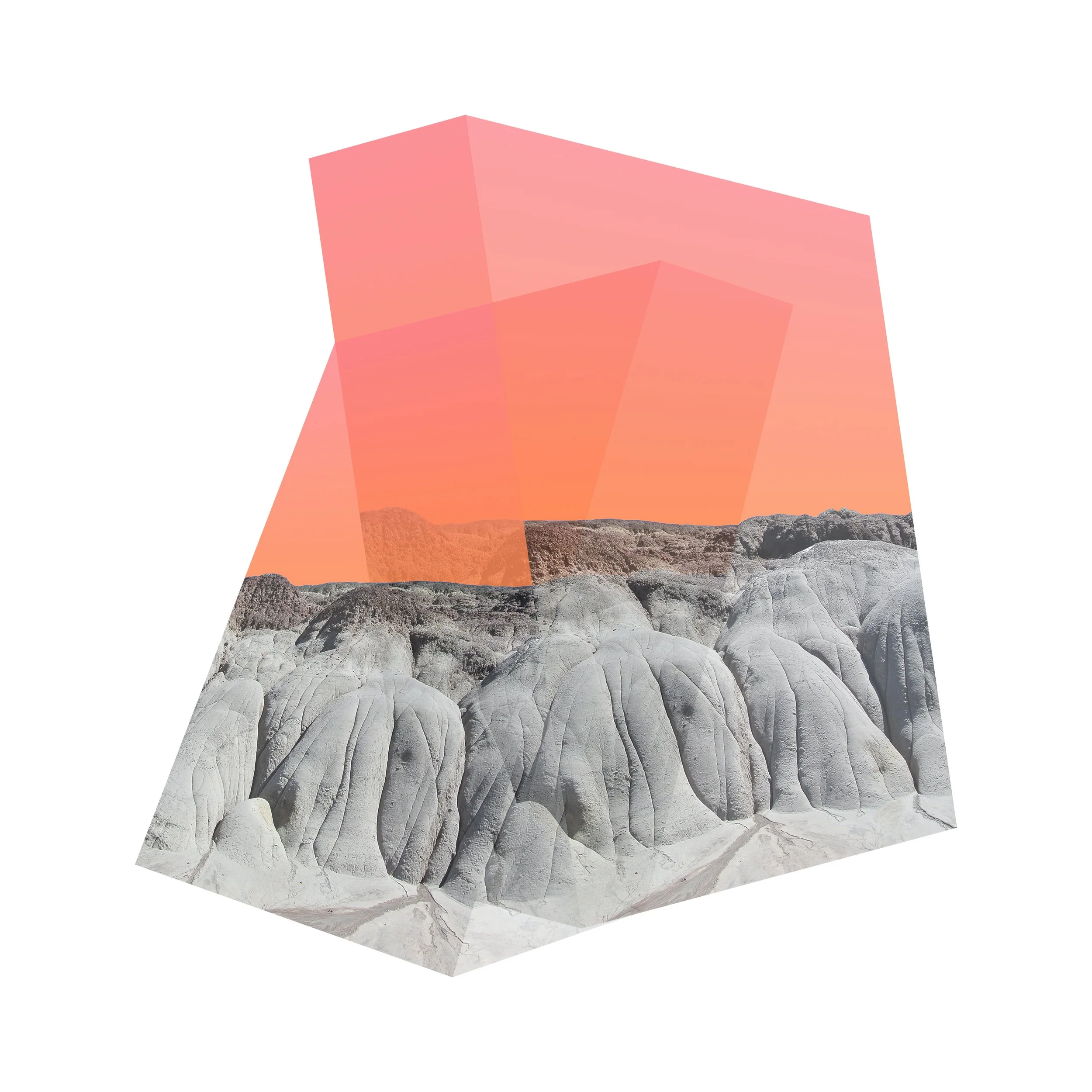
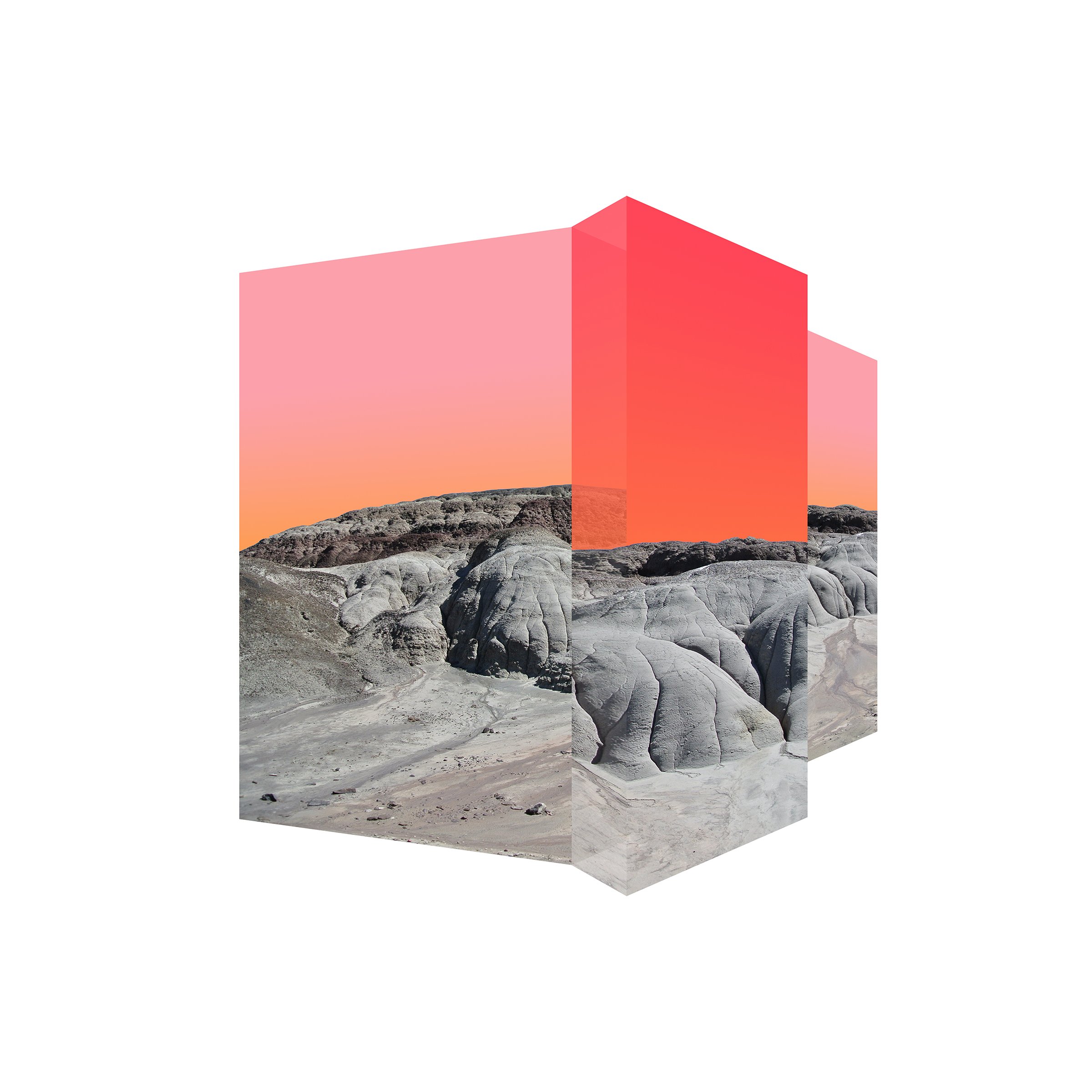
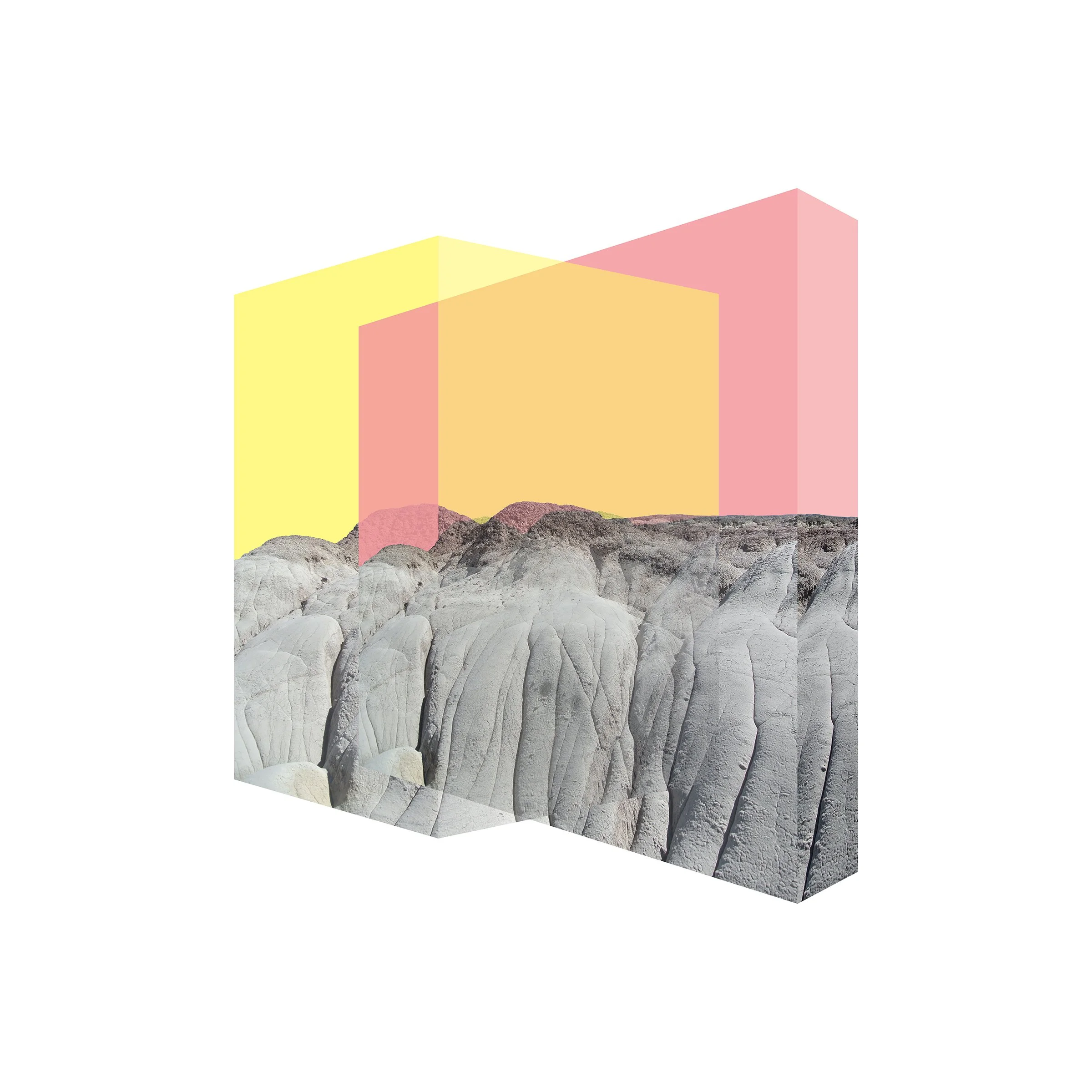
His Altered Landscape series are abstract, photography-based works that juxtapose colored geometric shapes against landscapes of New Mexico. The compositions are mounted to shaped plexiglass, creating the illusion of three-dimensional works.
In his words, the series was “…prompted by an intense sunset I witnessed while living in New York City in 2019. The sky was full of intense reds and oranges and the sun was a giant red fireball. The sunset was so unusually intense that I was surprised to see many New Yorkers had stopped to take pictures. I later learned that a series of fires in Canada had caused large swaths of smoke to filter down to the east coast. I grew up in New Mexico where our summer fire season always looms large. In 2020, the American West experienced one of the worst fire seasons on record with a total of 8 million acres burned and 13,000 buildings destroyed at a cost of $2.7 billion. Our changing climate is leading to the severity of the wildfires. These images were taken in Santa Fe during the summer of 2020. These intense sunset photos are the result of a smoke-filled sky due to fires in New Mexico, Arizona, Utah, and California. These unnatural colors, though sometimes beautiful to look at, are not supposed to be there. We as the human race are contributing to altering our landscapes.”
Altered Landscapes addresses the environmental impact of the oil industry around New Mexico’s Chaco Canyon, a national historic park sacred to the ancestral Puebloans; and the Black Place, Navajo Nation’s Bisti/De-Na-Zin Wilderness. More than 20,000 oil and gas wells are in operation on federally leased land across the 7,500 square miles large San Juan Basin. While 316,000 acres within a 10-mile radius around Chaco Canyon are protected from oil, gas and other mineral extraction, an overground pipeline runs through the Black Place. While the risks of methane waste and related pollution have not been extensively studied, they include health conditions such as respiratory ailments. According to the Environmental Defense Fund, these issues are hitting Indigenous communities particularly hard. While other artists deal with these themes head-on, Namingha’s work is in contrast non-confrontational, even quiet, inviting viewers to contemplate the devastating effects of the oil and gas industries on ancestral lands..